Fix Messy QuickBooks Books The month that never closed
Steven Palmieri is the Tax CFO, the Entrepreneur's CFO. We give the file a last day the bank agrees with, line payday up with the service you already pay, and hand you statements from a month that has ended.
Which month is open
 You will be talking to the Steven Palmieri practice.
The past already has a total
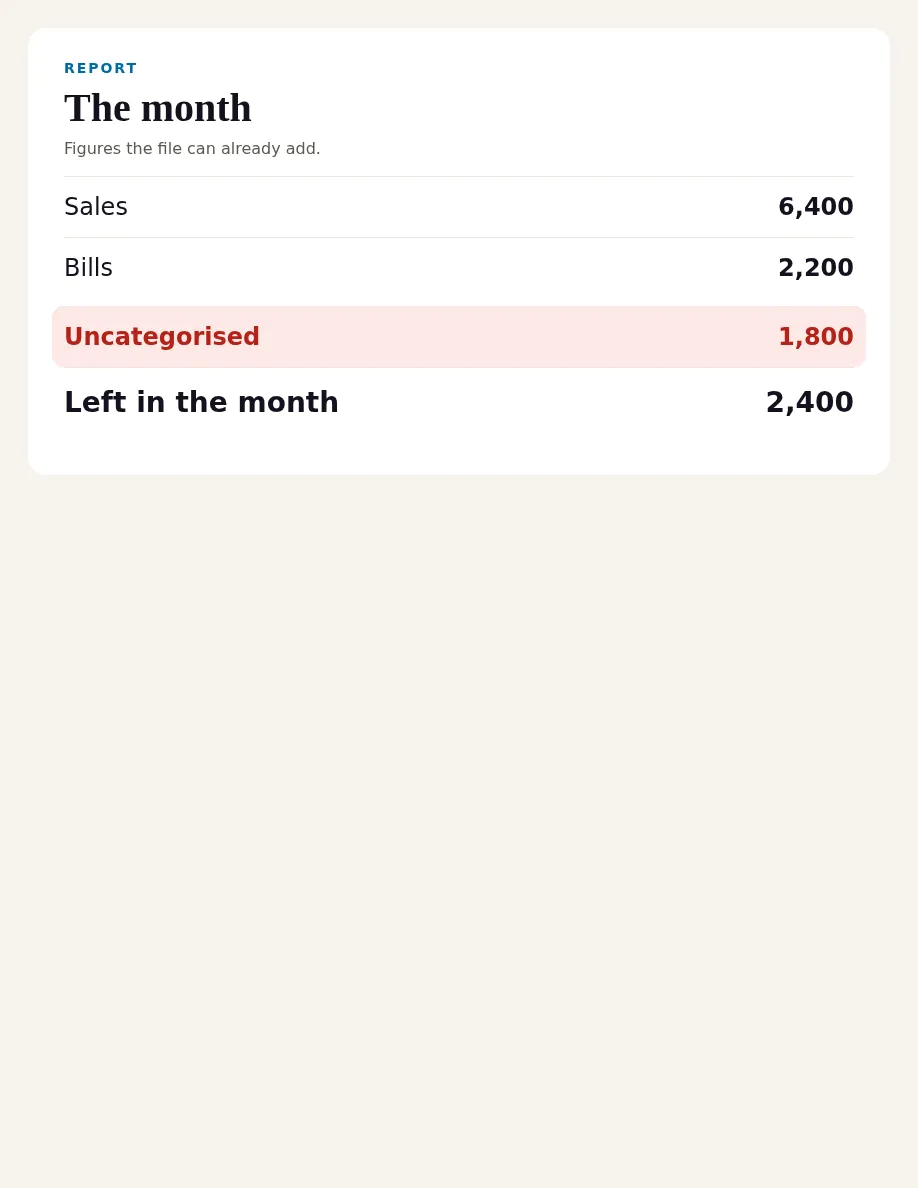
Lines that posted and deposits that cleared can be added up. That total is behind us. The Tax CFO chooses the next move, which open month receives a last day, which parked balance receives a name, and which check is too old to carry into the next statement.
The feed still waiting
A deposit with no name is a line the bank already posted and the file still cannot explain.
Click to see the feed ›Tap to see the feed ›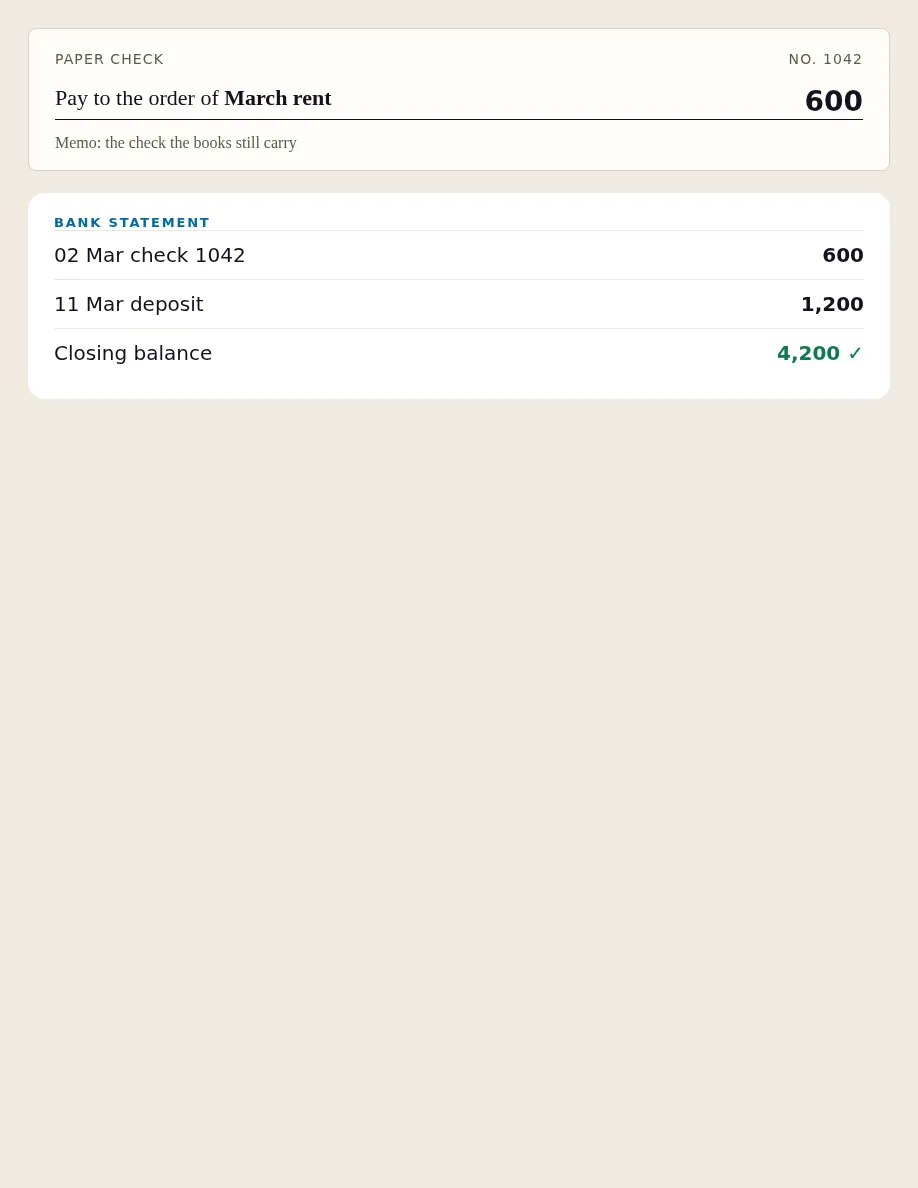
A balance still parked
A balance that has sat since the spring is a question that got comfortable. A parking account that old is a question we still have to answer before anyone is allowed to call the month finished.
Click to see the balance ›Tap to see the balance ›Checks the bank never saw
A paper check can sit on the books while the cash never leaves. We age it before we call the month finished.
Click to age a check ›Tap to age a check ›Two names for one idea
Two account names for one idea split one story across two rows, and the month gets harder to read.
Click to see the chart ›Tap to see the chart ›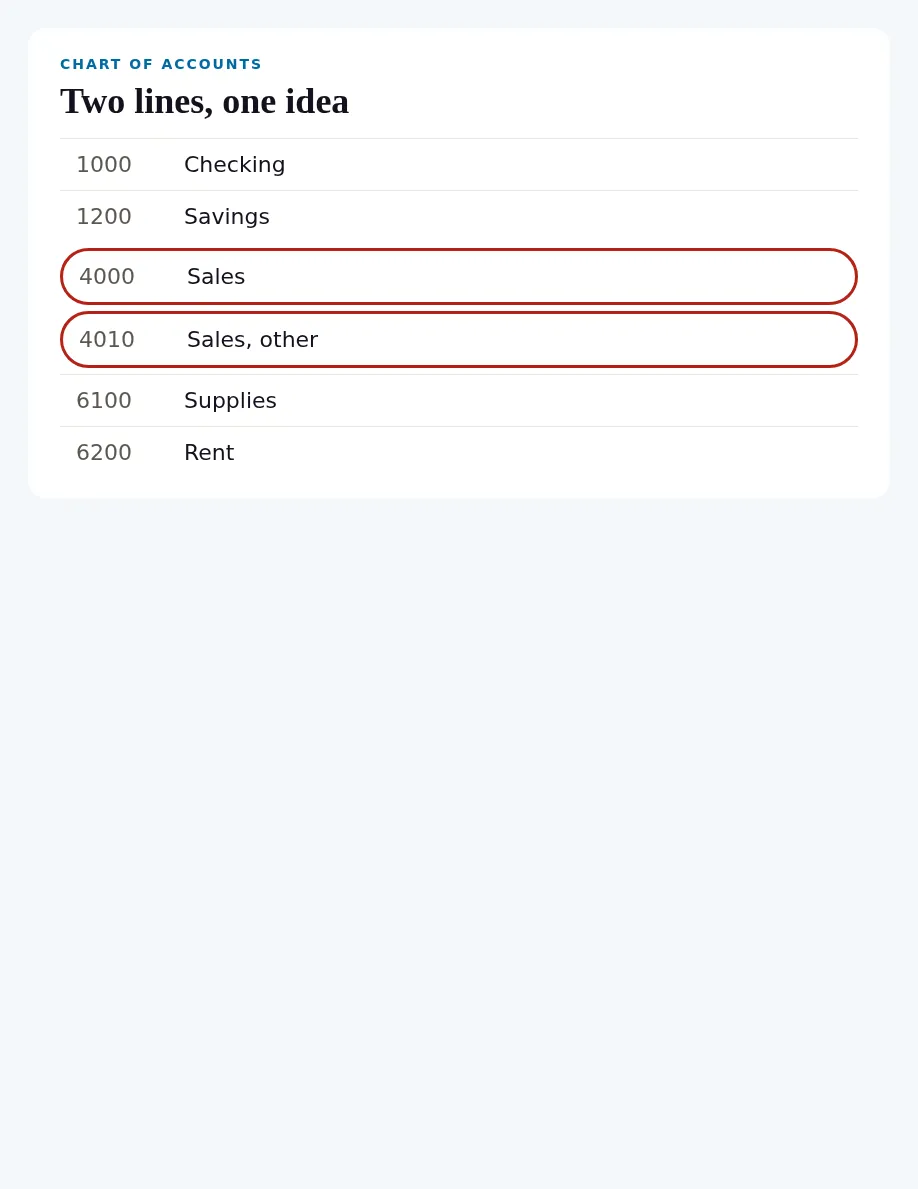
Money that was yours
Door cash and a card batch from the same night are still two deposits. One of them may be a customer and one of them may be you.
Click to sort a bill ›Tap to sort a bill ›A year that still takes lines
A return can be filed and the file can still accept a new line. We set a closing date so the year stays put.
Click to see the year ›Tap to see the year ›Six messes we sort first
Pick the mess that looks like the file on your screen.
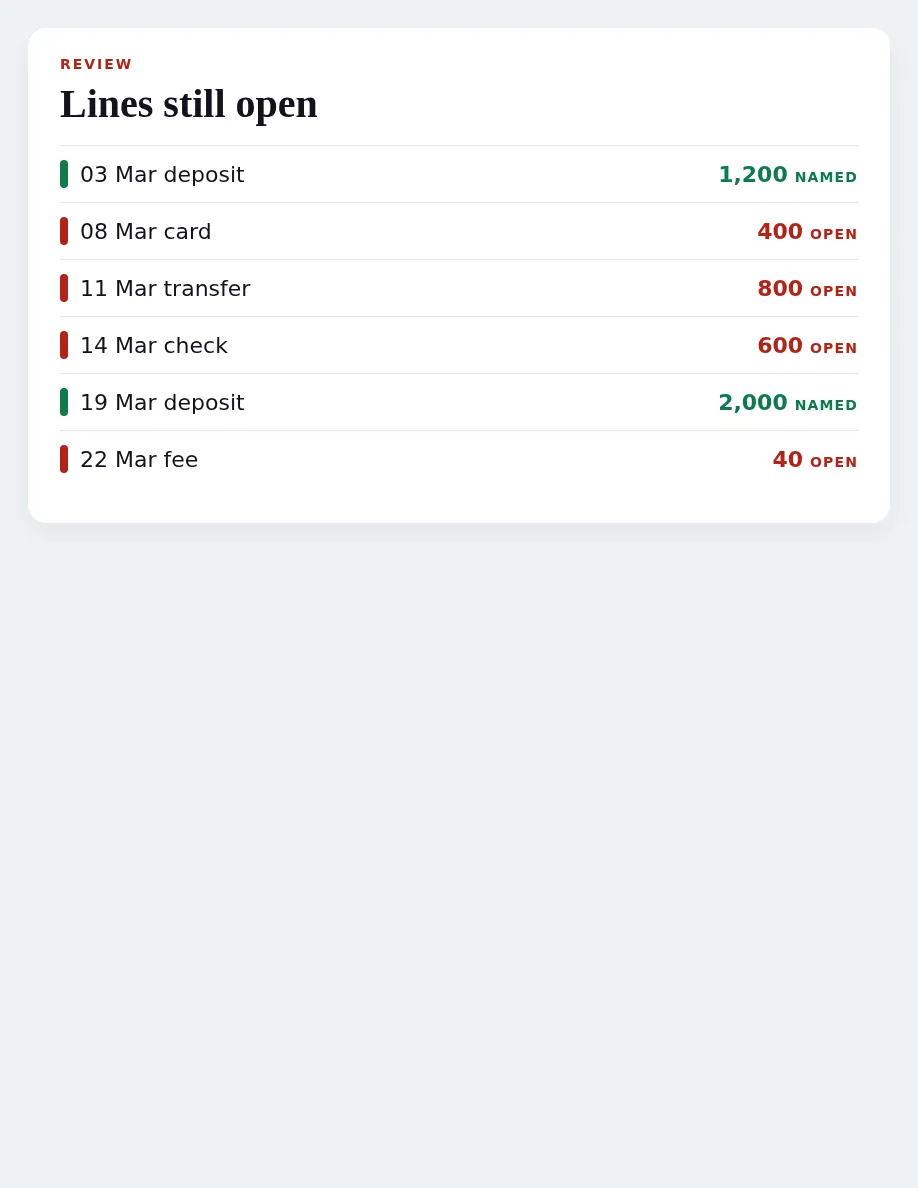
1Lines still in review
We read the review list with you.
The software can suggest a payee. A suggestion is not a match, and the month has no last day while those lines sit there.
2A parking balance
We empty it or we name the question.
An account whose only job is to wait should be empty when the sort ends. A balance left there is an open question, not a category.
3A check never cashed
We give the check an age.
A check from the spring is not the same trouble as a check from last week. We void it, reissue it, or find it, and we write the choice down.
4Two names, one idea
We keep the name that already has history.
A chart that grew a twin for meals or for the owner makes the month harder to read. We retire the extra name instead of posting into both.
5A house bill in the file
We keep only the part the work used.
The whole house electric bill is not a business cost. The share the work used can stay. The rest moves back to the owner side before the month ends.
6A year still taking lines
We set a closing date after the return is in.
Filing does not freeze the file. A closing date, set after the return is in, keeps a later receipt from rewriting that year.
Who closes the month with you
Steven Palmieri is the Tax CFO on this card. Steven and his team stay until the bank date and the file date are the same day, and they will decline a monthly read that starts earlier.
The file can sit in any city. A shared screen and a video call are how the month gets a last day, and that day is the one printed on the bank statement. We do not guess that day from the calendar on the wall.
Name the stuck account
You will be talking to the Steven Palmieri practice.
How a month gets a last day
A messy file is usually a month that never received a last day. The screen is full. The statement date was never named. We start by naming that date, then we ask whether every line on the statement has a line in the file.
The review list is where the software parks a suggestion. We do not let a suggestion become a record just because the totals look close. Each line gets a payee a person can say out loud, or it stays on the list and the month stays open.
A transfer from savings into the operating account did not earn a dollar. We pull those transfers out of income before the statement is allowed to look bigger than the month. A deposit you made yourself gets the same treatment.
Once the bank and the file agree on that date, later typing belongs to the next month. The statements you receive stop on the date we named.
The amount can be small and the month can still stay open, and a bank line with no payee keeps that month open until someone says who it was. We keep the name that already has history and we close the extra one, so the next import cannot wake it up. We keep owner cash and a customer batch apart because they landed on the same evening.
What a finished month lets you trust
A finished month can feed a return without a silent gap. When the return and the file do not match, we write the gap in plain language before anyone treats the return as the last word. Leaving the gap unspoken is how a year stays messy.
Household bills that landed in the business get split. The share the work used can stay. The rest is personal, and it does not belong in the expenses just because the card that paid it was the business card.
People still get paid through the service already on the account. Our work stops at making the file fit that service.
You can keep going month by month after that, or you can stop. Both are real endings. The fee is written only after the open months are on the screen. A typical number would treat your file as if it belonged to the next owner.
What we will not pretend
A monthly read waits until the month has a last day. If it does not, we make that day or we decline, and you hear which one before a price is written down.
A signed report that a lender sometimes wants is a different job. The boundary is on the disclosures page, in its own section, and we say it on the first call if that report is what the file needs.
Examples here describe a shape, never a customer's books. Leaving the dollar off is deliberate. Inventing one would look like a measurement we never made.